
| Summary: Stucco damage in Florida often starts silently with moisture intrusion. Early warning signs include cracks, bulging, staining, mold, and dampness. Florida’s heat, humidity, and frequent rain accelerate hidden damage. Mold can begin forming in 24–48 hours if moisture is not addressed. Ignoring small issues can lead to structural damage, rot, and costly repairs. Professional inspection is key to identifying and fixing the root cause early. |
Stucco is one of the most popular exterior finishes for homes across Sarasota County and Manatee County. It is durable, weather-resistant, and built for Florida’s heat.
However, Florida’s heat, humidity, and storm season put it to the test every single year.
The problem is not that stucco fails suddenly. It fails quietly. Moisture works behind the surface for months before anything visible appears. By the time a homeowner notices, the damage has already spread well beyond what the eye can see.
That’s what makes early detection by the professionals so critical in Southwest Florida’s climate. The signs are there. You just need to be aware before they become challenging to handle.
Here are 10 warning signs your stucco needs repair before a small problem becomes a serious one.
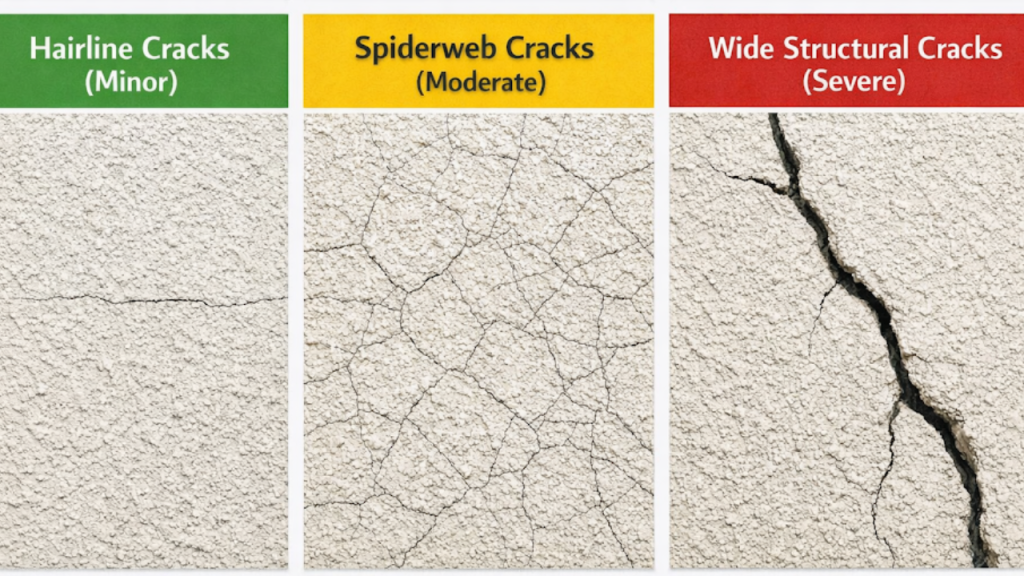
Cracks wider than 1/8 inch or spiderweb patterns in stucco are clear warning signs.
Hairline cracks can occur from natural curing. Wider cracks and interconnected “crazing” patterns often show:
In spiderweb cracking, the surface develops a network of fine lines that may seem cosmetic at first. But they can weaken the stucco’s ability to act as a protective barrier. Cracks wider than 1/8 inch are concerning because they create open pathways for water to get in.
The water can further reach:
This can cause rot, rust, or mold over time. These cracks are often found near stress points, such as windows, doors, and corners. They may worsen if linked to foundation settling and shifting common in Florida’s soil conditions.
You can seal them with caulk as a temporary fix. But it does not address the root cause. Professional stucco crack repairs are the safest way to prevent costly structural damage.
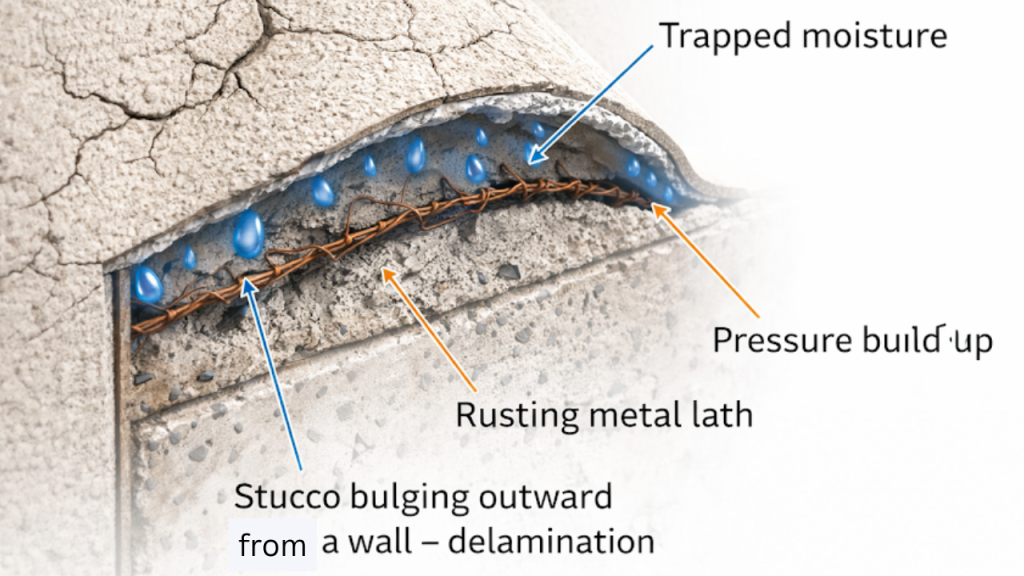
This sign indicates that moisture or structural failure is occurring behind the surface.
When stucco begins to bulge, it typically indicates delamination. This means the stucco has separated from the underlying substrate or lath due to:
Water intrusion from leaks, clogged drainage, or failed flashing can collect behind the wall. This creates pressure that pushes the stucco outward over time.
In some cases, corroding metal lath expands as it rusts, physically forcing the stucco away from the wall.
Vapor pressure trapped beneath non-breathable coatings can also cause blistering when heat builds up.
These bulges may feel:
Both of which signal varying levels of damage. These issues often require professional stucco repairs to properly address the underlying cause.
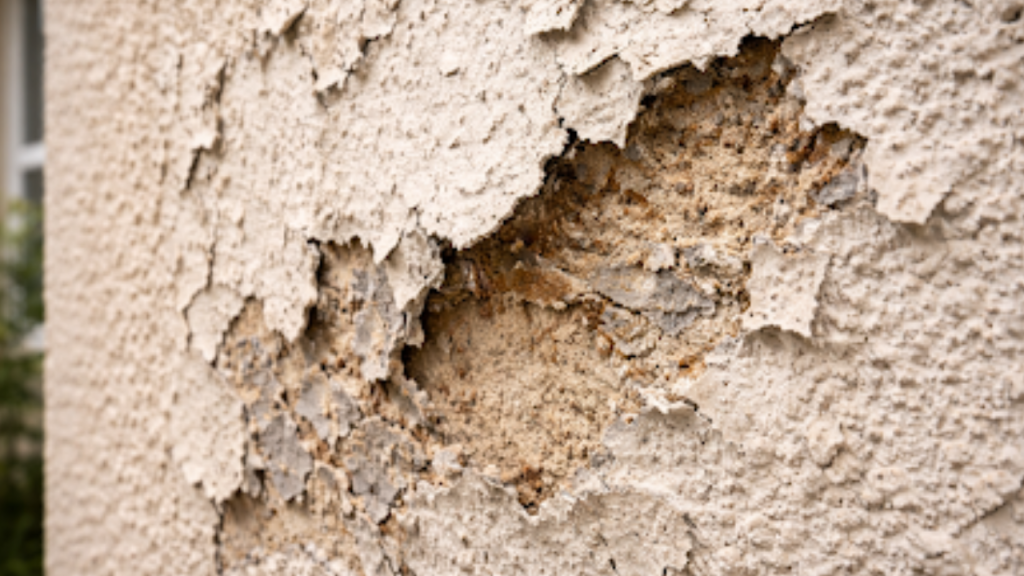
This sign means the wall surface is breaking down and losing its strength. The water gets into the stucco and slowly weakens it. It causes the material to:
It can also be caused by age, poor installation, or repeated exposure to rain and moisture. It begins to expose the layers underneath as the surface wears away. This makes the wall more vulnerable to further damage, such as mold, rot, and deeper cracking.
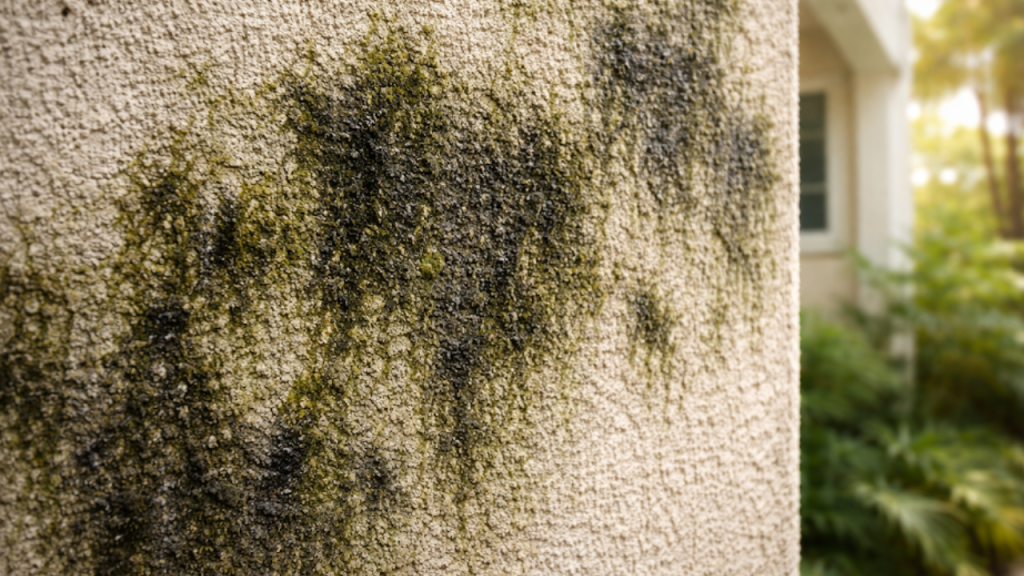
Mold or mildew on stucco is a sign that moisture is staying on the surface or getting behind the wall for too long.
These growths often appear as stains in the color of:
They are caused by rain, high humidity, poor drainage, or water from sprinklers hitting the wall.
In areas like Sarasota County and Manatee County, where the humidity is high, stucco can stay damp longer than it should.
According to the United States Environmental Protection Agency, if wet materials are not dried within 24 to 48 hours, mold can begin to grow.
That short window makes even small moisture issues a serious concern in Florida’s climate.
It can also point to deeper issues such as cracks, leaks, or hidden moisture.
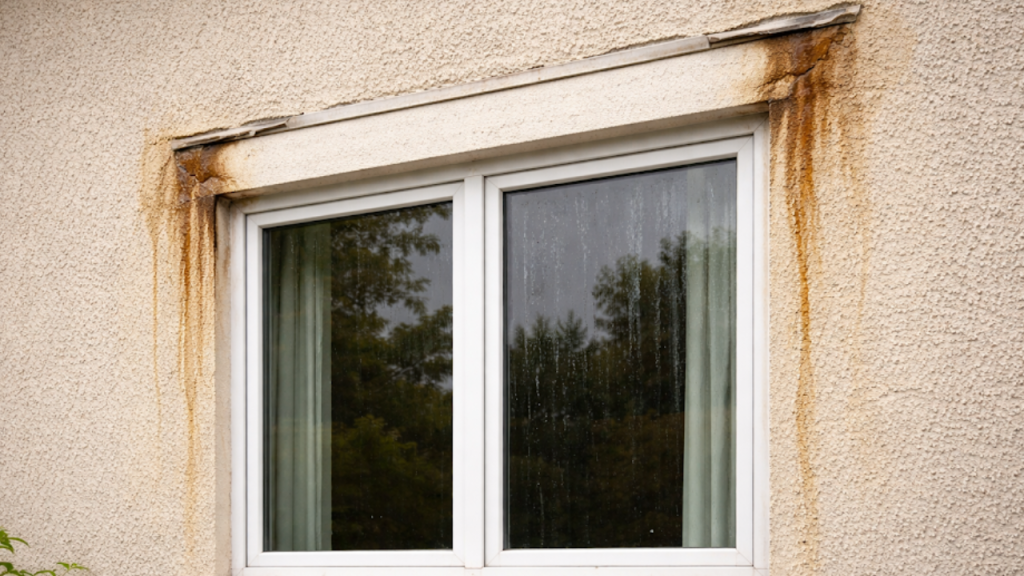
These signs signal that water is getting behind the wall.
These stains often appear as:
They start from the corners of windows, doors, or roof connections. These stains are commonly caused by:
When water enters these areas, it can carry rust from metal lath or fasteners, or tannins from damaged wood. Then it bleeds through the stucco and creates visible streaks.
In Sarasota County and Manatee County, frequent rain and high humidity can make this problem worse.
It is important to have an inspection and repair the source of ongoing water intrusion.
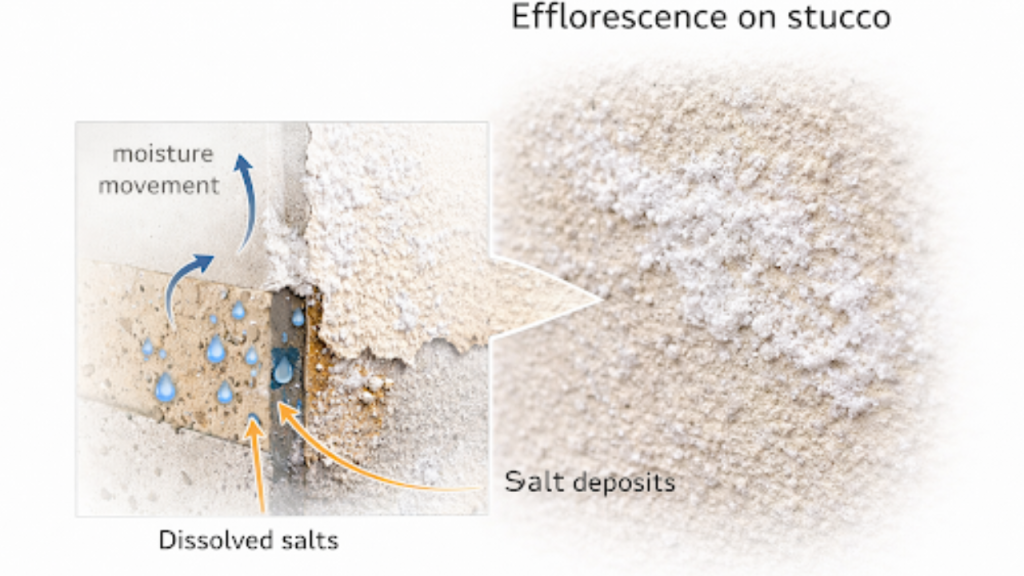
Efflorescence is a white, powdery residue on stucco that signals moisture is moving through the wall.
This residue forms:
White powder itself is not harmful, but it is an important warning sign that water is penetrating the stucco due to issues such as:
Efflorescence can appear more frequently and may point to ongoing moisture problems in areas where humidity and rainfall are high.
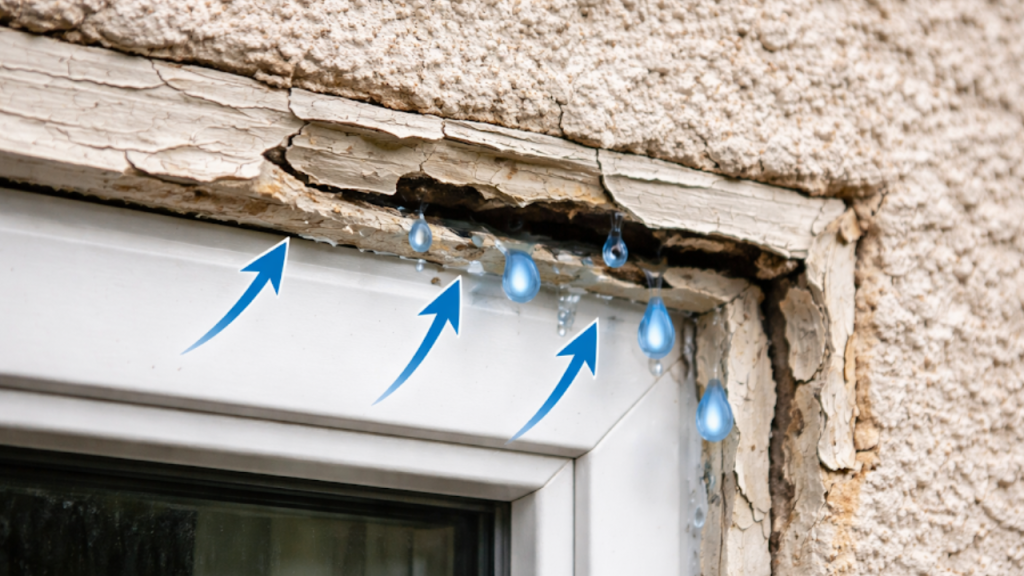
This sign shows that water has entered the stucco home.
Caulking acts as a flexible seal between the rigid stucco and the window or door frame. This helps keep rainwater out despite temperature changes and natural movement of the home.
Over time, this seal can crack, shrink, or pull away due to:
This results in the formation of small gaps, allowing water to seep behind the stucco.
Once water enters these openings, it can reach the wood framing, insulation, and interior walls.
You can prevent moisture problems in stucco homes by using high-quality, flexible sealant as soon as possible.
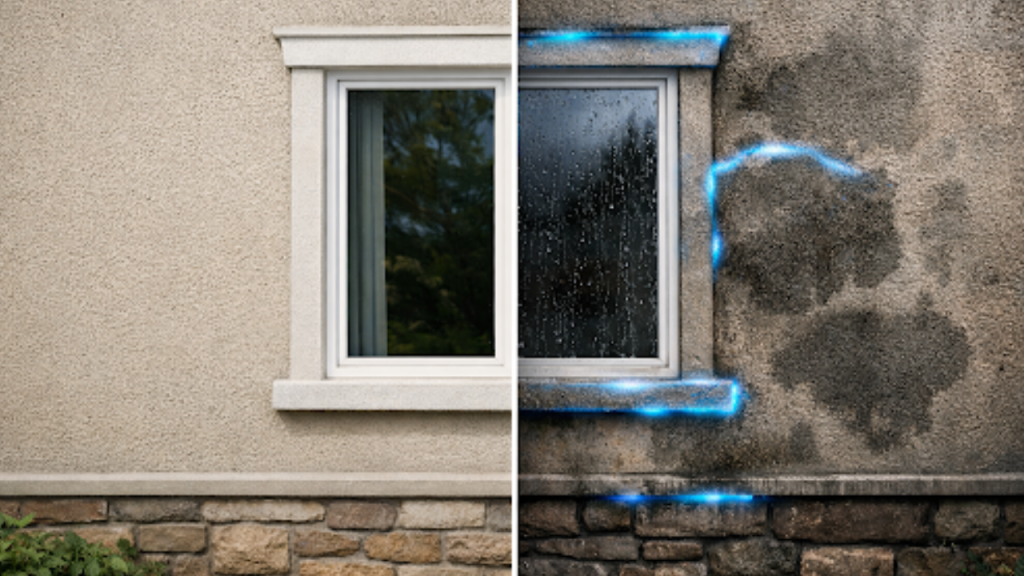
Persistent dampness after rain means the stucco is holding moisture longer than it should.
It is normal for stucco to darken when it gets wet, but it should dry within about 24 to 48 hours under normal weather conditions. If areas of the wall remain dark, soft, or damp for several days, it often indicates that water is getting trapped behind the stucco due to:
Sarasota County and Manatee County are the areas where humidity is high and rain is frequent.
So, poor drainage or blocked weep screeds can keep moisture inside the wall for extended periods.
Over time, this trapped moisture can soak the underlying wood. Make sure to have the wall inspected and the source of moisture addressed.
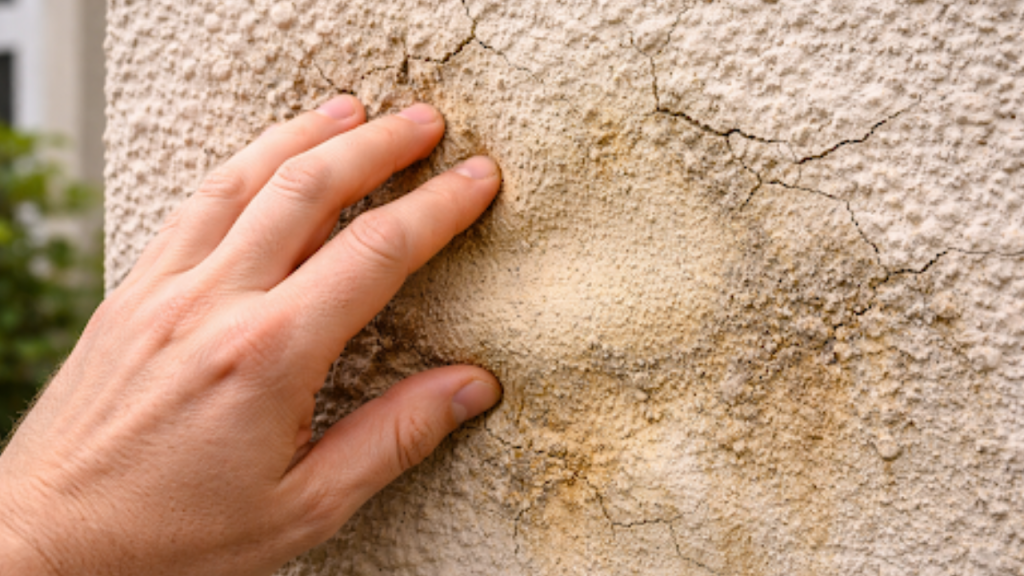
Soft or spongy spots in stucco are a serious sign of hidden water damage.
Moisture has entered behind the stucco when you press the surface, and it gives way. This weakens the material underneath, such as the wood sheathing or framing. Over time, trapped moisture can cause the stucco to lose its bond and lead to building, cracking, or crumbling. It may also cause wood rot and mold behind the wall, even if the outside looks mostly fine.
If a spot feels soft, it should be inspected quickly, because this usually means more serious damage that needs proper repair, not a simple surface fix.
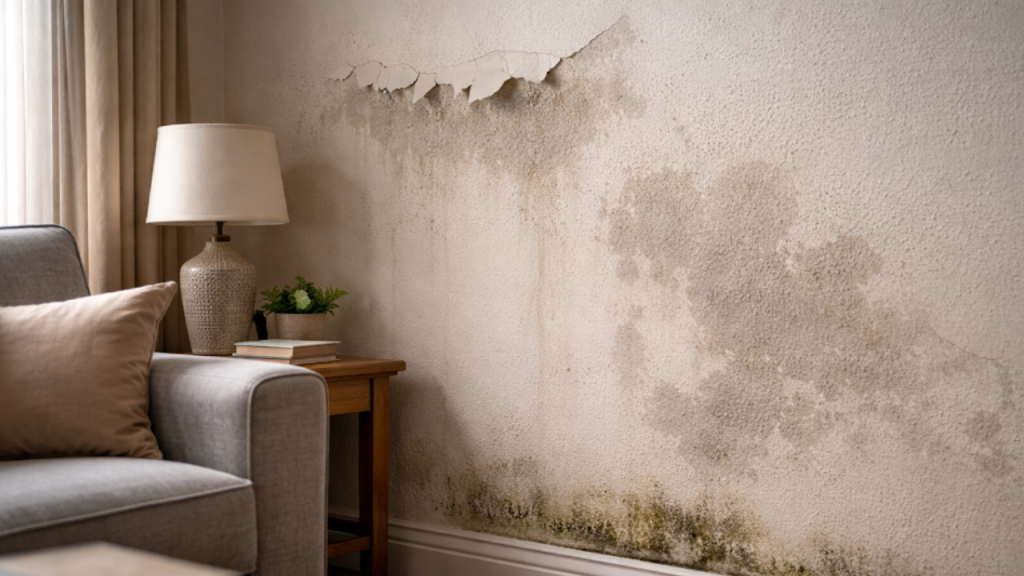
Interior moisture signs often mean water has entered behind the stucco and reached inside your home.
A musty smell, peeling or bubbling paint, and damp or soft drywall usually indicate trapped moisture inside the wall cavity. This happens when cracks, failed caulking or poor flashing allow rainwater to pass through the stucco. Once it is inside, the moisture can stay for long periods. After some time, you might start noticing these signs around:
| NOTE: Don’t brush it off. Consider the help of the reliable professional inspection team for proper handling of the issue. |
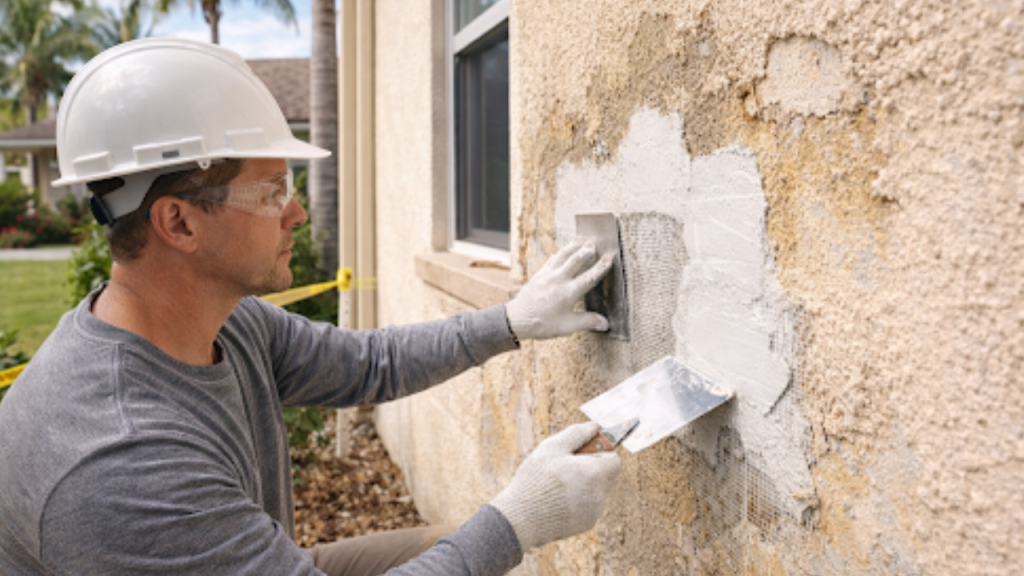
Stucco problems can grow quickly in Florida’s climate. Your home may develop small cracks or light discoloration that you may not notice. These small and hidden issues may develop into hidden water damage, mold, or structural issues in a short time.
This is where the professional inspection comes in. At Kinetic Stucco Restoration, we are dedicated to serving the residents of Sarasota County and Manatee County. We focus on protecting your property with reliable stucco and EIFS solutions.
Contact us today or request a free quote to schedule your inspection.