|
What You’ll Read In This Blog? This blog explains why stucco problems usually come from poor installation, not the material itself, and why choosing the right contractor matters. |
So, you chose a stucco finish for your home, but your neighbours shared that they didn’t have a great experience with it. Their stucco home finish had hairline cracks, moisture problems, and stains that wouldn’t wash out.
Disappointed, you turn to the internet, asking questions like
You get mixed answers that confuses you even more.
Here is the truth: Most homeowners don’t regret choosing stucco. They regret choosing a contractor who doesn’t know how to install it correctly. Now this raises another question;
“How do I choose the right stucco contractor?”
The solution is simple: interview your stucco installation contractor!
When you ask the right questions, about surface prep, standards, materials, timelines, and warranties, you can quickly spot who’s a true professional and who’s relying on shortcuts.
This guide gives you 7 questions to self qualify your Stucco home installation contractor.
Stay tuned with the blog for more.
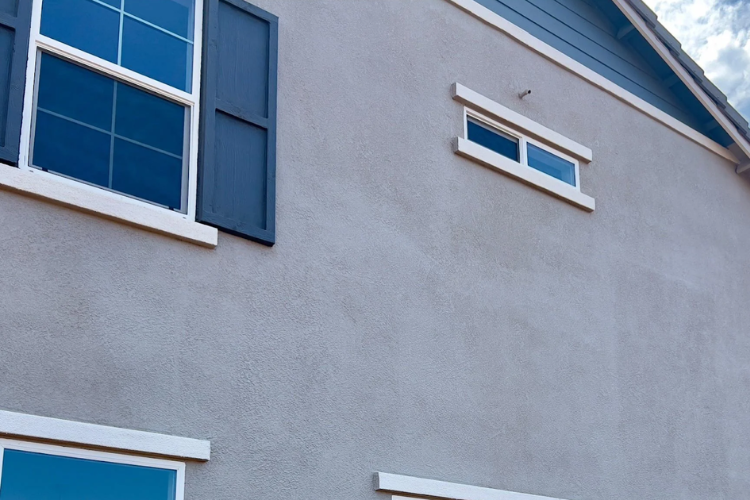
Yes! An exterior stucco wall is a system, not a single layer. It typically includes a water resistant barrier/drainage approach, lath, base coats, and a finish, making it durable and moisture resistant. Stucco is quite popular in 2026, especially in regions like Sarasota and Manatee County (FL), where the warm, humid climate makes it an ideal choice.
Over the past 90 days (19 Oct 2025 to 19 Jan 2025), Google Trends shows that stucco consistently had higher search interest than vinyl siding in the United States.

So, yes, Stucco is quite a popular option for exterior house finishes. It is blamed for improper installation. But most long-term problems start before the finish coat ever goes on: the wrong contractor skips moisture management details, rushes curing, or won’t meet the standards set by the guidelines. This is why asking your stucco home contractor these 7 questions is very important.
Licensing and insurance aren’t paperwork. This is your first protection layer.
Workers and crews use scaffolding, ladders, mixers, cutting tools, and fasteners for exterior stucco work, and the risk is real.
A stucco installation contractor should be comfortable producing documentation, license status, general liability, and workers’ compensation.
Why it matters: If a contractor can’t immediately provide proof, it often signals a business that isn’t set up to protect homeowners in the event of an unexpected event.
Red flags: “We’re exempt,” “We only use subs,” or “We’ve never had an issue.”
Stucco installation isn’t one universal method; it’s a system (traditional hard-coat, acrylic finishes, or EIFS variations) that must match your home’s structure, climate exposure, and design details.
A contractor who can’t clearly define the system is more likely to install “whatever they usually do” rather than what your exterior walls actually need.
Why does it matter?
When the contractor explains the stucco system and why it fits your home, you’re not just buying a finish; you’re buying a planned exterior wall approach that reduces surprises in the future.
Red flags: They can’t describe the layers or can’t explain how their choice handles moisture.
Lath may not be the most noticeable part of the stucco process, but it is a foundational need. If the lath is installed poorly, it can lead to cracks, peeling, or weak attachment. Most building codes refer to ASTM standards for stucco (C926) and lath installation (C1063).
Ask for: Contractors often show you the image of a completed installation. Make sure to ask for photos of in-progress jobs (not just finished walls).
Red flags: They never photograph prep, or they dismiss lath as “just mesh.”
Stucco is only as durable as the surface it’s attached to. If the underlying structure shifts, cracks, or rots, the stucco finish will fail as well.
Poor prep can lead to weak adhesion, uneven thickness, premature cracking, and a finish that looks “wavy” or inconsistent in sunlight.
On exterior stucco walls, small substrate issues become big visual issues once everything dries, because stucco highlights imperfections rather than hiding them.
What do professionals look for?
A professional will inspect substrate issues, old coatings, cracks, and prior water damage before applying new exterior stucco.
Red flags: They quote without looking closely, or they won’t describe how they’ll tie new work into old.
A Reddit Homeowner’s Journey To Stucco Work
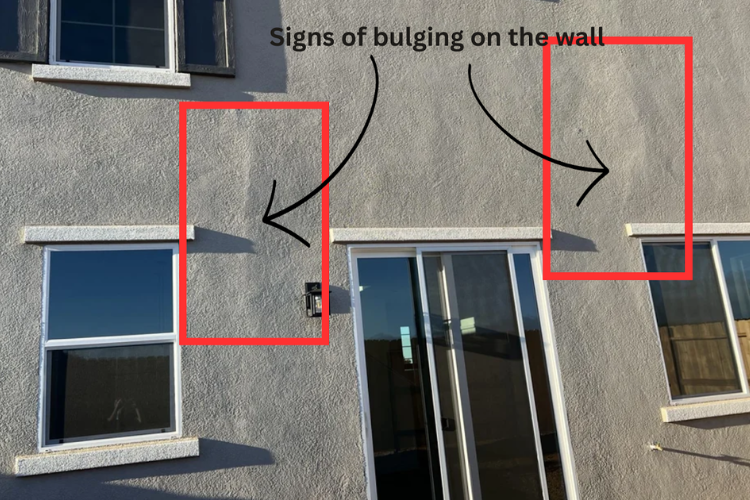
A homeowner (u/Turbulent_Tax5073) posted on Reddit after noticing bumps and uneven areas in the stucco on a brand-new home just before closing. Some people said this kind of work is “normal” for large tract homes, while others pointed out poor workmanship and missing details that could cause cracks later.
The homeowner asked the builder to fix it. Repairs were done, but some uneven spots were still visible. This shows a common issue: most stucco problems come from how it’s installed, not from stucco itself.
The lesson is simple; choosing the right stucco contractor and asking the right questions is more important than anything.
A solid warranty means that your stucco installation is covered in case something goes wrong. Make sure the contractor provides a written warranty that specifies what is covered, how long it lasts, and what voids it.
Why It Matters:
A good warranty gives you peace of mind that the contractor will stand behind their work. It also sets expectations for any ongoing maintenance or upkeep you may need to maintain.
Red Flags:
Be cautious if the contractor offers no written warranty or one that excludes “cracks,” as these are often the first signs of stucco failure.
Stucco installation is a detailed process, and its quality can suffer if the construction is not under professional supervision. The contractor should have a dedicated team member overseeing the project daily to ensure quality control.
Why It Matters:
Daily supervision means that your project progresses smoothly and that any issues are addressed at the same time.
Red Flags:
If the contractor cannot name the person overseeing the work or seems to leave things unmonitored, that’s a sign the project may lack the attention it needs.
A few photos of finished jobs are great, but looking at a portfolio of current projects can give you a clearer picture of the contractor’s work quality and reliability. Also, ask for past references who had similar stucco work done on their homes.
Red Flags:
If the contractor is hesitant to provide references or only shows photos from new projects, they may not have a track record of successful installations.
A detailed contract should clearly outline
This ensures that everyone is on the same page and prevents misunderstandings between you and your contractor. It also sets expectations for what happens if unexpected issues arise during the project.
Score each category 0–2 (0 = unclear, 2 = excellent). Total out of 20.
Interpretation:
| Score | What it means |
 16–20 16–20 |
A contractor thinks like a professional installer |
 11–15 11–15 |
Decent, but verify weak areas in writing |
 0–10 0–10 |
High risk for costly surprises |
Tip: Be cautious with quotes that are dramatically lower than the rest. A vague or unusually low bid often hides missing scope.
It is important to choose the right stucco installation contractor to make sure your exterior finish lasts for years without problems.
At Kinetic Stucco Restoration, we have 22 years of experience in stucco wall installation and repair services.
We believe in transparent communication about the queries of our clients. Ready to get your stucco project started? Contact us today for a detailed consultation and a free quote!”