
Faded color, hairline cracks, and moisture stains are common problems homeowners face with exterior stucco surfaces. Over time, exposure to sun, rain, and temperature changes can cause stucco to lose its appearance and protective qualities. Because stucco is porous and textured, painting it requires a different approach than standard exterior walls.
In this guide, you’ll learn the complete process of painting stucco—from preparation and repairs to choosing the right paint and applying a long-lasting finish.
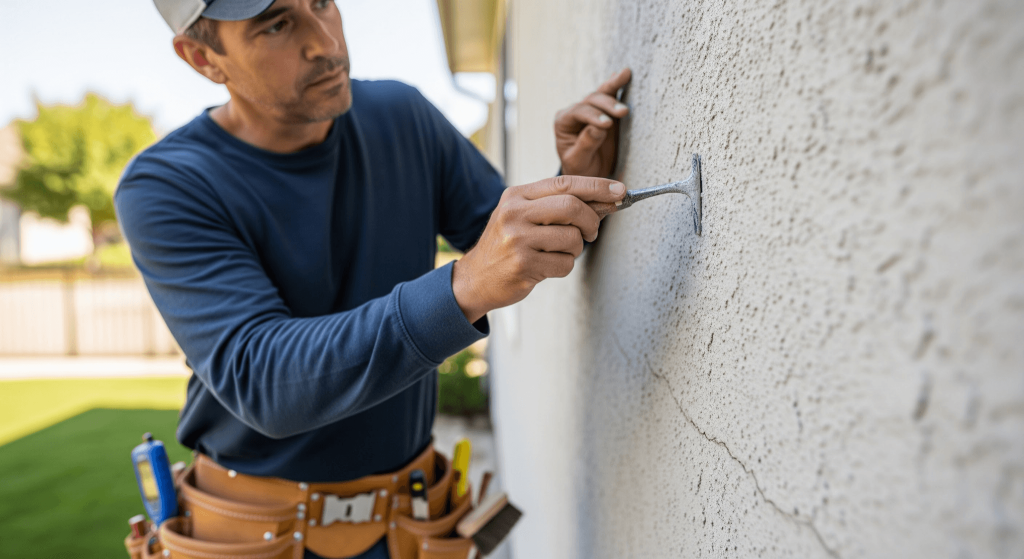
Yes, you can paint stucco, and in many cases, you should. Painting stucco exterior walls not only improves curb appeal but also helps protect the surface from moisture infiltration, UV damage, and general weathering. However, painting outdoor stucco requires more care than a typical exterior paint job.
Before you begin, understand a few key facts:
So does stucco need to be painted? Not strictly, but painting exterior stucco extends its life, reduces maintenance, and gives you far more color control than pigmented stucco alone.
This is one of the most critical questions for anyone repainting a stucco exterior or applying a fresh coat. Rushing the drying time is the single most common mistake homeowners make.
|
Stage |
Timeline |
Description |
|
Initial Set |
24–48 hours |
Stucco feels dry to the touch after application. |
|
Surface Dry |
3–7 days |
Surface becomes stable enough for light inspection. |
|
Safe to Prime |
Minimum 28 days |
New stucco should cure for at least 28 days before primer is applied. |
|
Full Cure |
Around 60 days |
Ideal curing time before applying the final paint coat. |
|
After Washing |
2–5 days |
Allow stucco to dry completely after pressure washing before priming. |
|
In our experience, we always recommend waiting the full 60 days — even if the surface feels dry to the touch after 28. The moisture trapped inside will cause paint failure every time, and no homeowner wants to redo the job six months later. |
TIP: Test moisture by taping a plastic sheet over the stucco surface overnight. If condensation forms under the plastic, the stucco still contains moisture and should not be painted yet.
For repainting the stucco exterior on an older home, the drying rules still apply after washing. Even a well-cured stucco surface that has been pressure-washed needs at least 2-5 sunny days to fully dry before you apply primer or paint.
Proper surface preparation is one of the most important steps in any exterior painting project. According to the U.S. Bureau of Labor Statistics, professional painters prepare exterior surfaces by cleaning, sanding, filling cracks, and applying primer before paint to ensure proper adhesion and durability. These preparation steps are especially important for textured materials like stucco, which can trap dirt, moisture, and debris in its porous surface. Skipping proper preparation often leads to uneven coverage, peeling paint, or premature failure.
Because stucco is rough and highly porous, taking the time to inspect, repair, and clean the surface properly will help ensure the new paint bonds well and lasts for years.
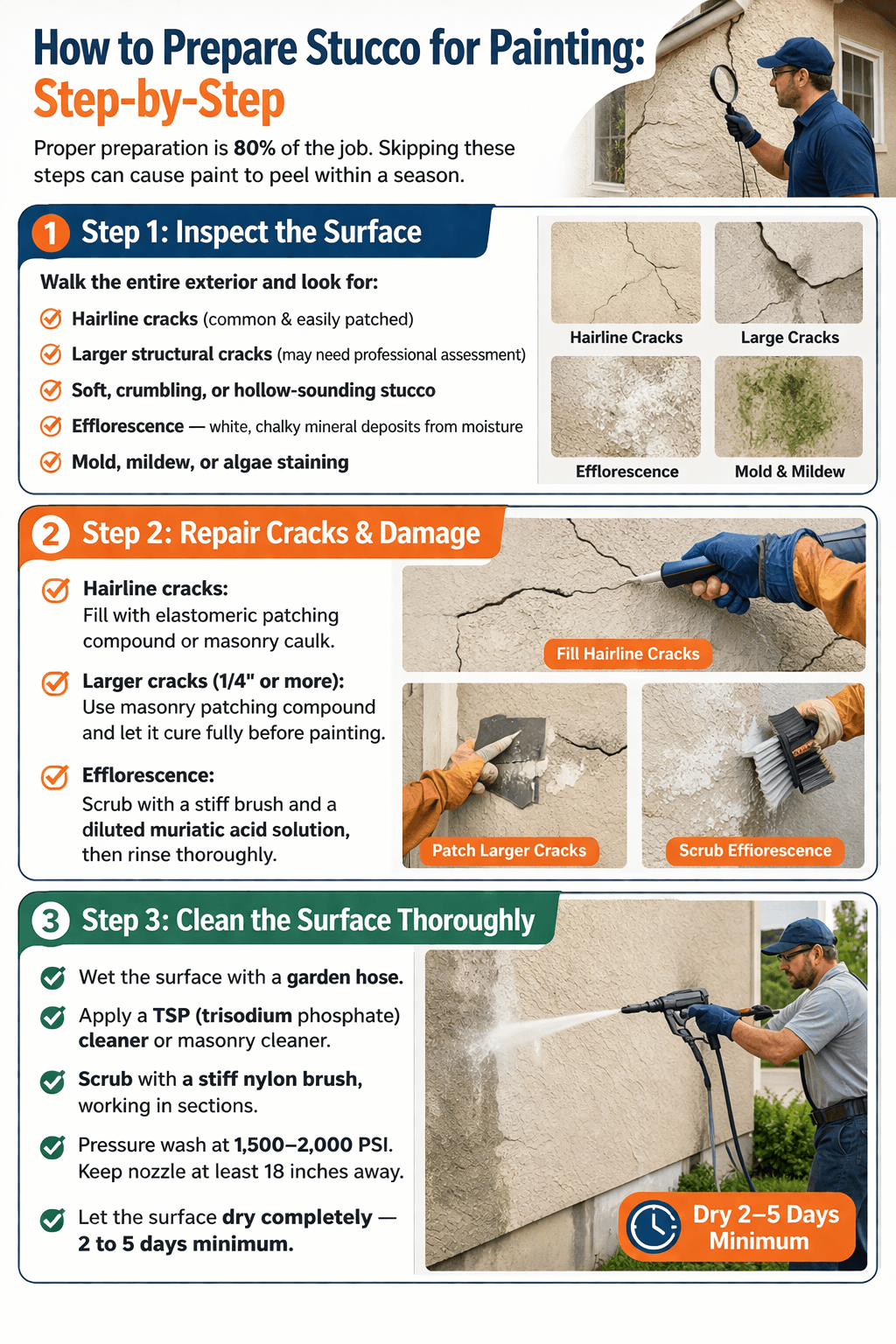
Preparing stucco properly is the key to a successful paint job. This step-by-step infographic shows how to inspect, repair, and clean stucco surfaces before painting for the best long-term results.
Walk the entire exterior and look for:
Hairline cracks: Fill with elastomeric patching compound or masonry caulk. The flexibility of elastomeric material allows it to bridge minor movement without cracking again.
Larger cracks (1/4″ or more): Use a masonry patching compound and allow it to cure fully before painting. For stucco for walls with significant damage, consider calling a stucco contractor before proceeding.
Efflorescence: Scrub with a stiff brush and a diluted muriatic acid solution (follow safety instructions carefully), then rinse thoroughly.
A clean surface is essential for paint adhesion. Exterior stucco collects years of dirt, grime, mold spores, and pollutants.
If you’re not comfortable handling the project yourself, it’s important to choose a reliable stucco contractor. Our guide on finding a trustworthy stucco company in Sarasota County explains what homeowners should look for before hiring a professional.
|
Pro Tip: Dealing With Mold on Stucco Can mold grow under stucco? Yes, especially in humid climates or where moisture penetrates cracks.
To treat mold: Mix 1 part bleach with 3 parts water. Apply with a brush or pump sprayer, let sit for 15 minutes, scrub, and rinse. Allow the surface to dry fully before priming. Seal any underlying cracks to prevent moisture reentry after painting. |
Choosing the right exterior paint for stucco is just as important as your prep work. Stucco is a highly porous, alkaline surface, so not every paint will perform well on it.
|
Paint Type |
Best For |
Key Benefit |
|
100% Acrylic Latex |
Most exterior stucco applications |
Excellent adhesion, breathable, flexible, UV resistant |
|
Elastomeric Paint |
Older stucco with cracks or movement |
Bridges hairline cracks, thick waterproof membrane |
|
Masonry Paint |
General masonry & stucco |
Alkali-resistant, good for first-time painted stucco |
|
Textured Paint |
Stucco needing cosmetic improvement |
Fills minor imperfections, adds visual depth |
Elastomeric paint is the premium choice for painting stucco exterior. It stretches and contracts with temperature changes, spans hairline cracks, and forms a thick waterproof barrier. The trade-off is cost—it runs 2-3x the price of standard acrylic—and if moisture gets behind it through cracks, it can trap water and cause bigger problems.
100% acrylic latex is the most popular exterior stucco paint for a reason: it’s breathable, flexible, adheres well to masonry, and comes in a huge range of colors. It’s the best all-around stucco paint for most homes.
|
Bottom line: Use elastomeric paint if your stucco has a history of cracking or you live in a climate with extreme temperature swings. Otherwise, a premium 100% acrylic masonry paint is the right call. |
With your surface clean, repaired, and dry, you’re ready to start painting stucco. Here’s how to do it right.
Never skip the primer when painting stucco — especially on new or repaired stucco. A masonry primer does three critical things:
Apply primer with a roller or sprayer. Allow it to dry fully — typically 4-8 hours depending on temperature and humidity. Check the manufacturer’s instructions.
Is it better to roll or spray paint stucco? The professional answer is: both, used together.
Spray + Back-Roll (Best Method): Use an airless sprayer to apply a wet coat of paint, then immediately follow with a thick-nap roller to push the paint into the texture. This combination gives maximum coverage, eliminates holidays (missed spots), and produces a professional finish.
Roll Only: Use a 3/4″ to 1-1/4″ nap roller and apply with firm pressure to work paint into the texture. This works well for smaller areas or DIYers without a sprayer.
Keep a wet edge and work in sections of 4-6 feet to avoid lap marks. Cut in around windows, trim, and doors with a brush, then roll.
Wait at least 4-6 hours between coats (check your specific paint instructions). In humid or cool conditions, wait longer — up to 24 hours. Painting over a coat that hasn’t fully cured leads to poor adhesion, bubbling, and a shorter-lasting finish.
Two coats are not optional — they’re essential. The second coat provides full coverage, uniform color, and a complete protective film, making exterior stucco paint durable. Apply the second coat using the same method as the first.
For elastomeric paint, a third coat is recommended, especially on heavily textured stucco or when relying on the paint to bridge hairline cracks.
|
Weather Guidelines for Painting Stucco |
|---|
|
Ideal temperature: 50°F to 90°F (10°C to 32°C) |
|
Humidity: Below 85% |
|
Wind: Avoid high wind (especially when spraying) |
|
Rain: No rain for at least 24-48 hours after application |
|
Direct sun: Avoid painting in direct midday sun — causes too-fast drying |
|
Best time of day: Early morning after dew has lifted, or late afternoon. |
These are the exact weather checks and application methods our crew at Kinetic Stucco Restoration follows on every job. Skipping even one of these steps — especially painting in direct sun — is what separates a paint job that lasts 8 years from one that fails in 18 months.
Painting stucco on a full house exterior is a significant project. Here’s how to approach it as a complete job:
A typical full exterior stucco painting project takes 3-5 days for an average-sized home:
Stucco is porous and rough — it consumes more paint than smooth surfaces. Budget 20-30% more paint than the square footage would suggest for a smooth wall. A general rule:
If your stucco is structurally sound — no large cracks, no soft or delaminated sections, no water intrusion — painting is almost always the better choice. It’s faster, cheaper, and less disruptive.
Re-stuccoing (or replacing stucco entirely) is warranted when:
Painting stucco properly improves both the appearance and durability of your home’s exterior. Proper surface preparation, allowing sufficient drying time, and choosing a high-quality masonry primer and a breathable exterior stucco paint are essential for a long-lasting finish. Applying two even coats and following weather guidelines will help ensure professional results that protect your stucco from moisture, cracking, and fading for years.
If you want expert results without the hassle, the team at Kinetic Stucco Restoration is here to help. Our experienced professionals handle everything from stucco repair to complete exterior painting, delivering durable, high-quality finishes you can trust. Contact us today to schedule your consultation.