Walk through almost any neighborhood in Florida, and you will notice one thing that the exteriors look different from homes up north. Smoother. More solid. More finished. That’s largely because of two materials, stucco and plaster, that have been shaping the look and performance of walls for centuries.
At first glance, stucco and plaster look alike, but they serve different purposes in construction. Understanding the differences helps you choose the right material for your project. Whether you are comparing plaster vs stucco for a renovation, asking “is stucco plaster?”, or simply trying to understand their composition and properties, this guide has all the information you need. Keep reading!
Stucco is a durable, cement-based wall finish primarily used on exterior surfaces. It has been used for centuries in construction, particularly in Mediterranean, Spanish, and Southwestern-style architecture.
Stucco is typically made from:
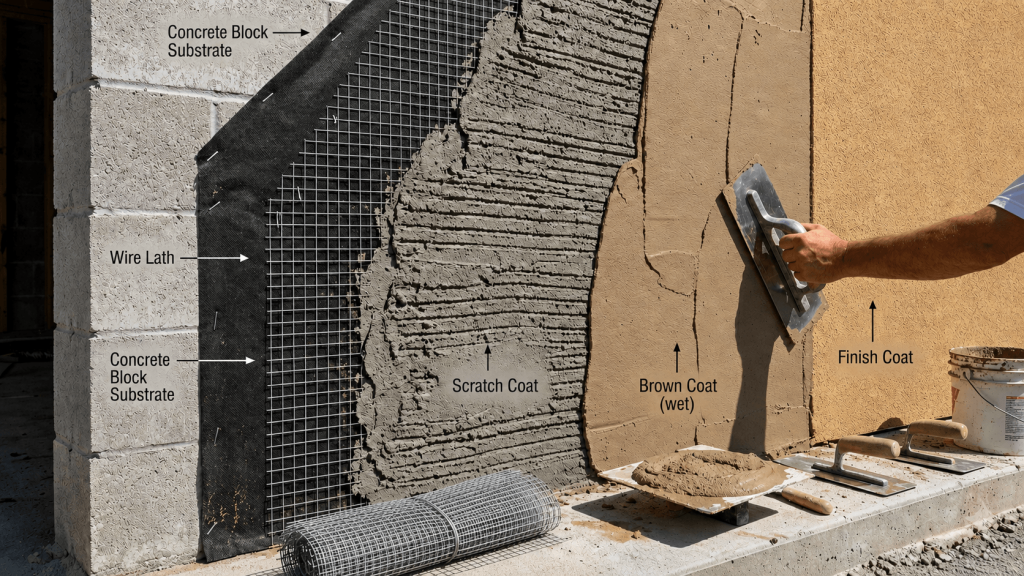
It is applied in layers over a substrate, typically wire lath, concrete block, or masonry, and hardens into a dense, durable surface that bonds tightly to the structure beneath it. A stucco wall functions as much more than a decorative finish.
It is engineered specifically to withstand the demands of outdoor exposure, such as UV rays, rain, temperature swings, and, in Florida’s case, salt air and hurricane-force winds. Therefore, it acts as a weather barrier, a moisture deterrent, a fire-resistant shell, and an insulating layer, all at once.
Traditional stucco is applied in a three-coat system:
Modern stucco systems also include EIFS (Exterior Insulation and Finish System), a synthetic variation that incorporates foam insulation board beneath the finish layer, providing enhanced energy efficiency. Both traditional hard-coat stucco and EIFS are widely used on residential and commercial buildings.
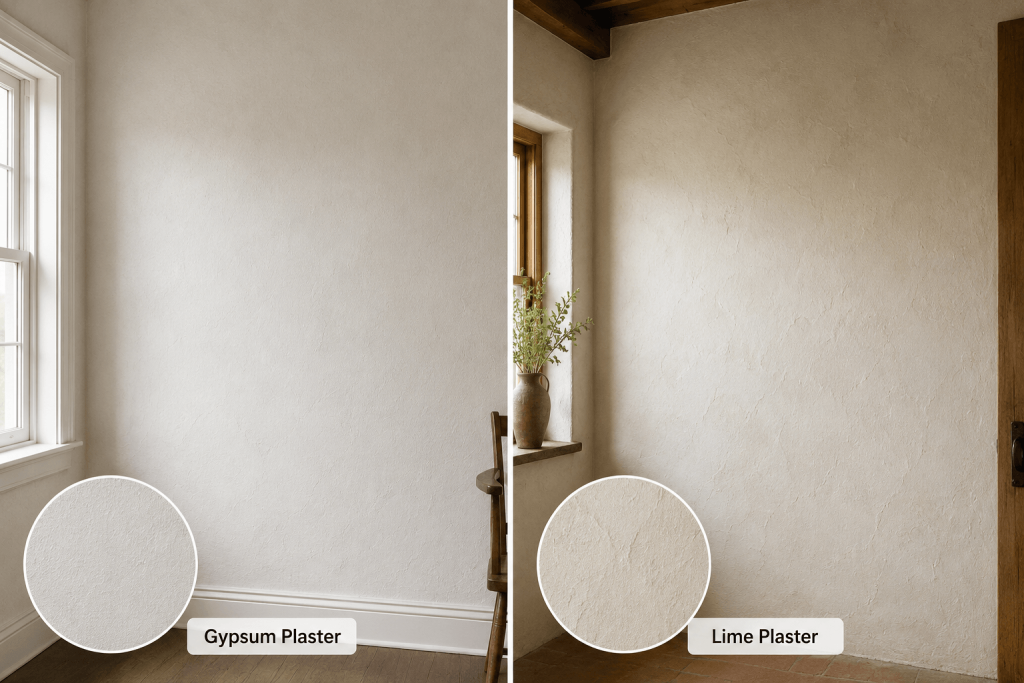
Plaster is a broad term for wall finishing materials. The key point to understand is that, in most residential contexts, plaster refers to an interior wall finish, not an exterior one.
Take a look below to know about the two popular types of plaster:
The most common type found in older American homes. It is a calcium sulfate-based compound that, when mixed with water, is applied to interior walls and ceilings. It produces a hard, smooth surface, but it is not waterproof and cannot withstand prolonged exposure to moisture or weather.
NOTE: True gypsum plaster should never be used on exterior walls. It will absorb moisture, expand, crack, and ultimately fail. |
One of the oldest building materials in human history uses calcium hydroxide derived from limestone as its base. It was used extensively in pre-modern construction and has seen a small revival in historic preservation work. Like gypsum plaster, it is primarily suited for interior applications or sheltered surfaces.
QUICK CHECK:
Is Stucco Plaster? Yes! Stucco is technically a form of plaster, specifically a Portland cement–based plaster designed for exterior use. Both stucco and traditional plaster follow the same basic principle, i.e., they are applied wet and cure into a hard, protective surface. However, the difference between stucco and plaster lies in their composition and purpose. In simple terms, think of stucco as exterior plaster and traditional plaster as interior finishing material. |
Feature | Stucco | Plaster |
Composition | Portland cement, sand, lime, water (cement-based) | Gypsum or lime, sand, water (gypsum plaster), or cement in special cases |
Common Use | Exterior walls, facades, and trim | Interior walls and ceilings |
Coats/Thickness | Multi-layer (scratch, brown, finish) ≈7/8″ minimum total | Single/one-coat finish (~3/8″–1/2″ on lath or over gypsum board) |
Durability | Very high – hard, weather-resistant, fire-resistant | Good indoors – impact-resistant when thick, but not water-resistant |
Texture/Finish | Typically textured or sand-finished (matte, rustic) | Usually smooth or fine-textured (flat, satin) |
Cost (per sq ft) | $6–$12 installed | $3–$10 installed |
Maintenance | Low (reseal/paint occasionally), requires skilled matching repair | Low (touch-up paint if needed), easier for small patches |
NOTE: The prices mentioned above are only estimates. Always ask a professional contractor about the accurate, project-specific costs. |
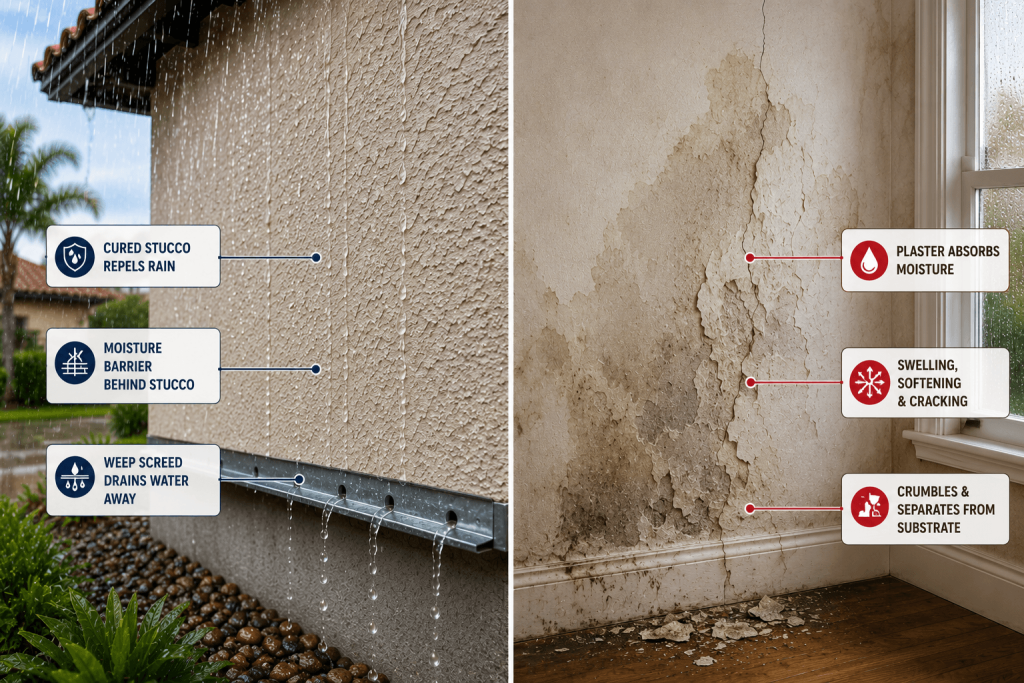
Stucco doesn’t simply repel water; it manages moisture as part of a broader wall system. A proper stucco system includes a moisture barrier, weep screeds for drainage, and a cured surface that allows any incidental moisture that does enter to drain and evaporate rather than accumulate behind the wall.
Plaster has no such capability. Gypsum is hygroscopic. It actively absorbs moisture from the surrounding air and any water it contacts. When plaster gets wet, it softens, expands, and eventually crumbles or separates from the substrate. This is why plaster is strictly an indoor material, used only where humidity and water exposure are controlled
A properly installed three-coat stucco system on an exterior wall can last 50 to 80 years or more with routine maintenance. In Florida’s High-Velocity Hurricane Zones, stucco installed over wire lath on properly sheathed framing is identified in the Florida Building Code as a compliant exterior wall assembly when constructed in accordance with Section 1626.4.
But plaster is more vulnerable to physical impact, hairline cracking from building settlement, and any moisture that finds its way inside. Its long lifespan indoors should not be mistaken for weather toughness.
Stucco is non-combustible, meaning it does not burn or release toxic gases when exposed to fire. According to section 2516.1.6.1, when stucco is applied over concrete or masonry surfaces to achieve fire-resistance ratings, it must be installed in a minimum of two coats. The combined thickness of the stucco system must be at least 1/2 inch (12.7 mm) to comply with the required fire-resistance standards.
On the other side, plaster also offers some fire resistance but is primarily designed for interior use and does not provide the same level of exterior protection against fire exposure or environmental stress.
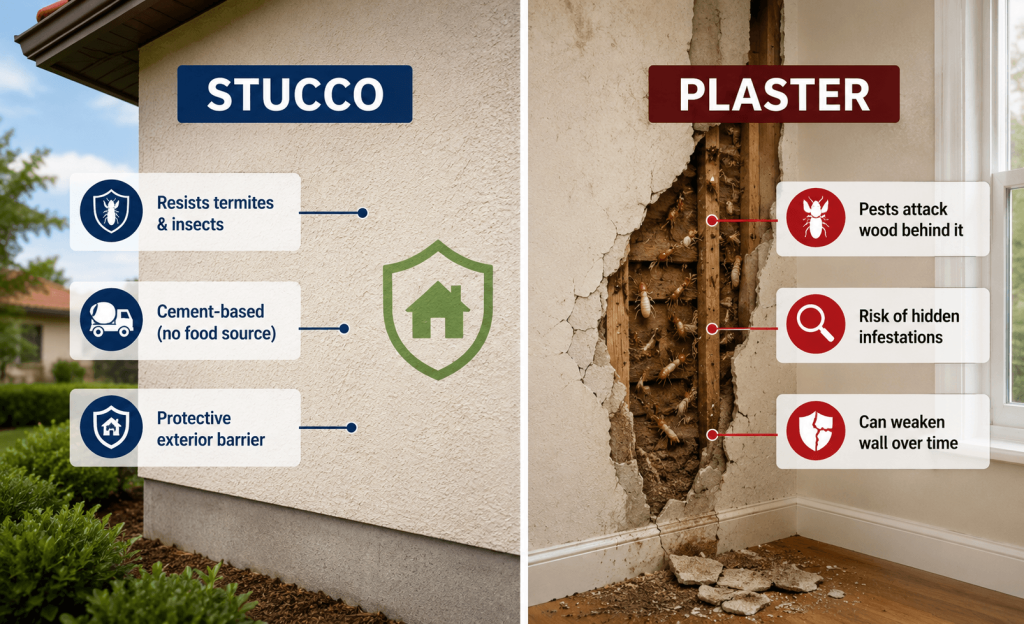
Stucco offers a strong advantage in pest resistance because it is cement-based and does not attract termites, carpenter ants, or other wood-boring insects. In high-risk regions like Florida, where the Formosan termite causes billions in property damage annually, this matters. Over time, this can translate into lower maintenance costs and fewer structural repairs.
Plaster, though not a food source, is often applied over wood or drywall, which pests can attack. Stucco’s exterior layer acts as a protective barrier, limiting entry points and reducing the risk of hidden infestations inside wall systems.
Stucco improves energy efficiency through its moderate thermal mass, helping regulate indoor temperatures by absorbing heat during the day and releasing it slowly at night. This reduces temperature fluctuations and can lower both cooling and heating demands over time. EIFS (Exterior Insulation and Finish System) takes this a step further by incorporating continuous foam insulation on the exterior, significantly reducing thermal bridging through wall studs and improving overall insulation performance.
Plaster, while primarily used for interior applications, also contributes to energy efficiency in its own way. Its dense composition provides a degree of thermal mass that can help stabilize indoor temperatures, especially in well-insulated homes. However, because it is thinner and not part of the exterior envelope, such as stucco or EIFS, its impact on overall building energy performance is more supportive than primary.
Stucco stands out for its design flexibility and ability to enhance exterior aesthetics. It can be applied in a wide range of textures, including smooth, sand, Spanish lace, skip trowel, and dash finishes, and can be painted in virtually any color. This versatility allows owners to match various architectural styles, from Mediterranean and contemporary to craftsman and colonial.
Plaster, by contrast, is primarily used for interior walls and ceilings, offering smooth or decorative finishes but limited exposure to design variety outdoors. It lacks the durability and versatility required for exterior customization and visual impact.
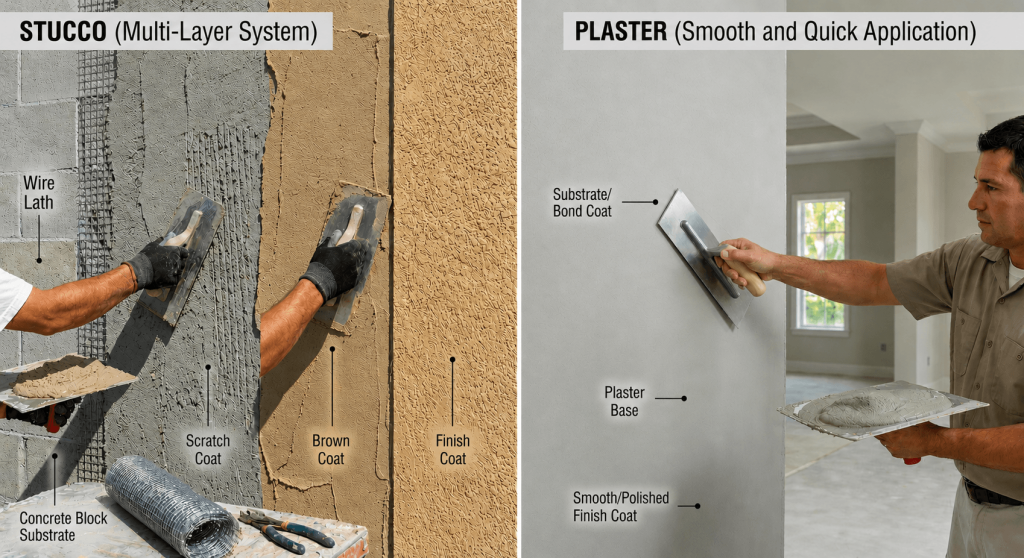
Stucco requires a structured, multi-stage installation system. The process begins with substrate preparation. A moisture barrier is applied, followed by metal lath fastened to the framing or sheathing. Three coats are then applied in sequence. Rushing the process leads to adhesion failure, cracking, and delamination that can compromise the entire exterior wall system.
Plaster installation is more surface-oriented. The focus is on spreading, leveling, and finishing techniques rather than structural layering. Interior plaster is applied over a substrate, and the number of coats varies by system. The emphasis throughout is on achieving a uniform, flawless surface rather than building structural thickness.
Stucco typically runs $6 to $12 per square foot installed for a traditional three-coat hard-coat system, with EIFS (Exterior Insulation and Finish System) running somewhat higher depending on insulation thickness and finish specification. That figure is higher than some competing exterior cladding options upfront. But stucco’s 50-to-80-year lifespan makes the cost per year of service highly competitive.
Plaster for interior applications runs $3 to $10 per square foot, depending on the type (basic gypsum vs. Venetian plaster), the number of coats, and the level of detail. It is generally less expensive than exterior stucco because the material itself is lighter, substrate preparation is less demanding, and installation does not require structural reinforcement.
NOTE: The prices mentioned above are only estimates. Always ask a professional contractor about the accurate, project-specific costs. |
QUICK GRABStucco vs Plaster: When to Use Each Choose Stucco when:
Choose Plaster (Interior) when:
|
NOTE: Plaster belongs inside. Stucco belongs outside.
It is now quite clear that stucco is the best choice for exterior walls. But even the best stucco installation requires maintenance over time. Understanding what to watch for helps owners act early, before small issues become expensive repairs.
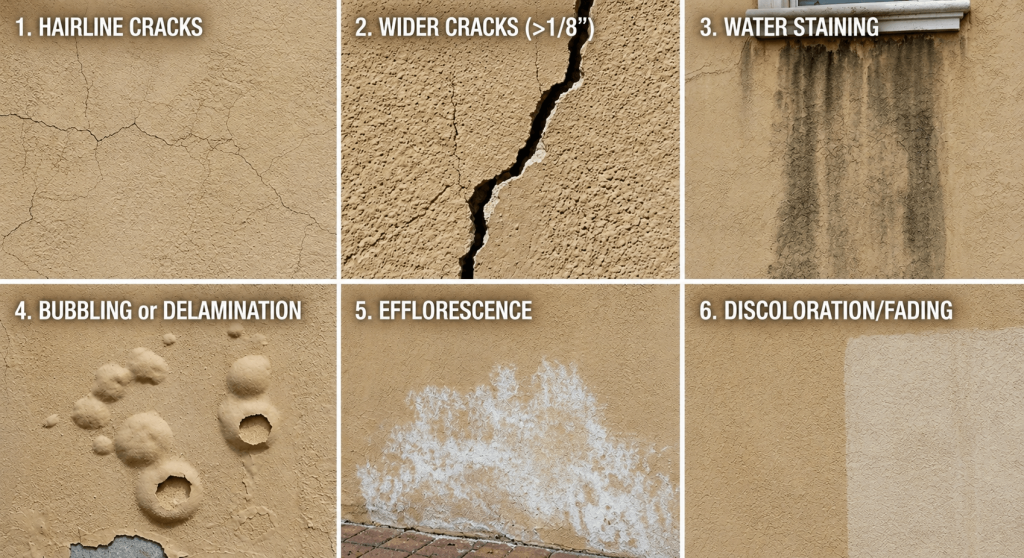
Problem | Likely Cause | Action Required |
Hairline cracks | Normal curing or seasonal movement | Monitor; seal if widening |
Wider cracks (>1/8″) | Structural movement or impact | Professional repair |
Water staining | Moisture infiltration behind stucco | Inspect flashing; professional repair |
Bubbling or delamination | Moisture trapped between layers | Full section repair needed |
Efflorescence (white deposits) | Water moving through stucco | Address the moisture source |
Discoloration/fading | UV exposure over time | Repaint with an elastomeric coating |
For more in-depth insights, check out our detailed guide 10 Signs Your Stucco Needs Repair Before It Causes Serious Damage.
Need expert help? Trust Kinetic Stucco Restoration! With over 20 years of experience, we deliver reliable stucco services, from repair to installation, across Sarasota and Manatee Counties. |
Stucco and plaster may look similar, but their roles in construction are fundamentally different. So, the ultimate choice between stucco and plaster comes down to location and performance needs. For durability, energy efficiency, and long-term protection outdoors, stucco stands out.
For smooth, decorative interior finishes, plaster remains a reliable option. Understanding these differences ensures better material selection, improved building performance, and fewer costly mistakes over time.
Stucco is a Portland cement-based exterior wall finish designed for outdoor use, while plaster typically refers to gypsum or lime-based materials used on interior walls. Stucco is weather- and moisture-resistant and structurally durable. Plaster (gypsum) is not suitable for exterior applications and will deteriorate quickly when exposed to moisture or weather.
Technically, stucco is a type of Portland cement plaster, but in practical terms, they are treated as a separate material with different uses. When most people say “plaster,” they mean an interior gypsum-based product. When they say “stucco,” they mean an exterior cement-based finish. The overlap in terminology causes confusion, but the distinction in application is clear.
Gypsum plaster should not be used on exterior walls as it absorbs moisture and will crack, bubble, and fail. Portland cement plaster (stucco) is the correct material for exterior plaster walls. Lime-based renders are used in historic and European construction on sheltered masonry surfaces, but are not standard for modern residential exterior applications.
A properly installed and maintained stucco exterior can last 50 to 80 years or more. The key factors are installation quality, exposure to climate, and maintenance frequency. In Florida’s coastal climate, annual inspections and timely crack repair are essential to achieving maximum lifespan.
Traditional stucco is made from Portland cement, sand, water, and often a small amount of lime for workability. Modern synthetic stucco (EIFS) uses a polymer-modified base coat over foam insulation, finished with an acrylic or silicone topcoat. Both types must meet the material standards set by ASTM C 926, as required by the Florida Building Code.
Florida’s hot, humid, coastal climate makes stucco an ideal exterior finish. It resists moisture, handles UV exposure without warping or fading like wood, provides fire resistance, and holds up against the wind loads common in hurricane-prone regions.